London is a global capital offering extensive opportunities across business, finance, technology, culture and the creative industries. Students can explore major museums and galleries, experience food and communities from around the world, or visit landmarks including the London Eye, Buckingham Palace and Piccadilly Circus. Extensive public transport connects the city’s different neighbourhoods, while national rail and international links make it easier to explore other parts of the UK and Europe.

United Kingdom
Why study in the UK?
The United Kingdom combines world-leading universities with vibrant cities, historic towns and dramatic countryside. Students can complete degrees faster than in many other countries, build strong career prospects, and enjoy a lower cost of living compared to popular alternatives like America and Australia.
The UK’s centuries-old tradition of higher education has produced some of the world’s most famous leaders and thinkers. UK universities sit consistently at the top of the world’s rankings, with qualifications that are sure to open doors to any future students dream of. UK universities offer a broad range of programs and specialisations, as well as opportunities to gain real-world experience while students complete their degrees.
World-class universities
4 of the world's top 10 universities are in the UK, according to the QS World University Rankings 2026.
Quality you can trust
Recognised universities must pass strict UK government quality checks, guaranteeing high standards of teaching and support.
Somewhere for everyone
Choose from 12 study destinations across the UK, from Aberdeen in Scotland to Plymouth on England's south coast.
Language immersion
Build fluency in English, the world's leading language of business - spoken by around 400 million people as a first language and over a billion as a second.
Generous work permit
From January 1st 2027 - the Graduate Route allows international students to stay and work in the UK for up to 18 months after finishing their studies.
Varied choices
With larger cities or smaller towns, plus a diverse range of landscapes - students can enjoy many experiences in a relatively small country.
The UK’s student cities

London
Birmingham
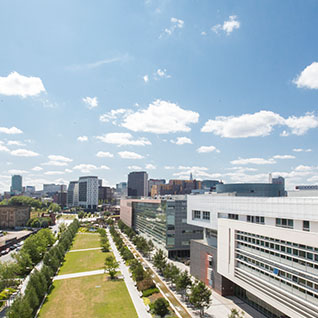
Birmingham is a major student city with strong connections to business, manufacturing, media and the creative industries. Students can explore the Bullring and Mailbox, experience the city’s diverse food scene or visit attractions including Cadbury World. Districts such as Digbeth and the Jewellery Quarter bring together independent businesses, culture and industry, while direct rail connections provide access to London and other UK cities.

Manchester
Manchester combines major universities with a strong identity shaped by music, sport, media and industry. Students can attend Premier League football, concerts and cultural events, explore Chinatown and the city centre, or visit shops and entertainment at the Trafford Centre. The Peak District and Lake District provide access to landscapes and walking trails beyond the city, while Manchester’s businesses and employers create connections across technology, finance, healthcare and the creative sectors.
Cambridge
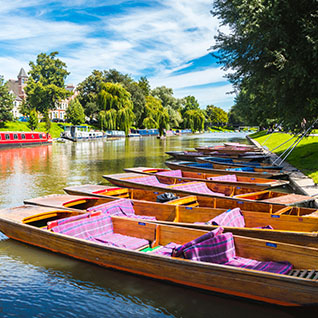
Cambridge is a historic university city known for its academic environment, distinctive architecture and compact centre. Students can explore the city on foot, take a traditional punt along the River Cam or visit landmarks including the Corpus Clock and centuries-old college buildings. Cycling is central to everyday movement, while cafés, museums, green spaces and a large student population shape the city’s character. Direct rail connections also place London within reach.
Chelmsford
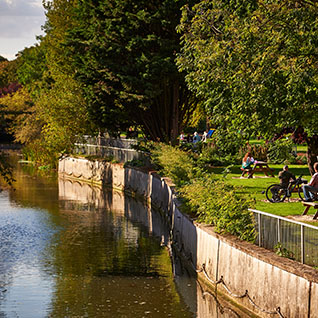
Chelmsford is a compact city in Essex offering a combination of university life, shopping, parks and easy access to London. Students can visit Chelmsford Cathedral, explore the extensive grounds of Hylands House and Park or use the city centre’s restaurants, shops and entertainment. Direct rail services connect Chelmsford with central London, while the surrounding countryside provides opportunities to experience a quieter side of south-east England.
Peterborough
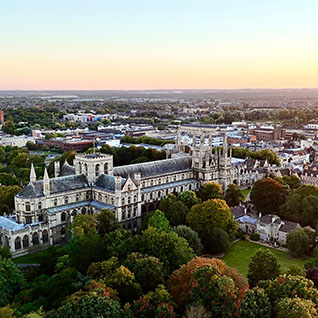
Peterborough is a growing city centred around a historic cathedral and well-connected railway station. Students can explore Peterborough Cathedral, one of the city’s most recognisable landmarks, or spend time at Ferry Meadows, where lakes, trails and open space support walking, cycling and water activities. The city has a more manageable scale than the UK’s largest urban centres, while direct rail services provide access to London, Cambridge and destinations across the country.

Hatfield
Hatfield offers a campus-focused student experience within easy reach of London. Students can use the University of Hertfordshire’s facilities, explore nearby parks and countryside or travel to attractions including the Warner Bros. Studio Tour in Watford. Direct rail connections place central London within reach, providing access to its employment, culture and entertainment while allowing students to live and study outside the capital’s busier centre.
Portsmouth
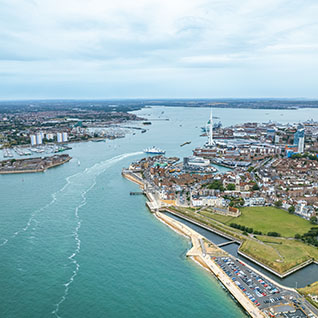
Portsmouth is a compact coastal city where university life, maritime history and waterfront experiences sit close together. Students can visit the Spinnaker Tower, explore the shops and restaurants at Gunwharf Quays or travel by hovercraft to the Isle of Wight. Many parts of the city are accessible on foot, while the seafront, historic dockyard and surrounding coast give Portsmouth a distinctive identity as the UK’s only island city.

Aberdeen
Aberdeen is a coastal Scottish city with strong connections to energy, healthcare, engineering and sustainability. Students can explore the historic fishing quarter of Footdee, visit the city’s beaches and cultural venues or travel into Aberdeenshire, known for castles, coastal landscapes and outdoor activities. The nearby Cairngorms and Grampian Mountains provide opportunities for hiking, mountain biking and winter sports, while the city itself offers a compact urban and university environment.
Newcastle-under-Lyme
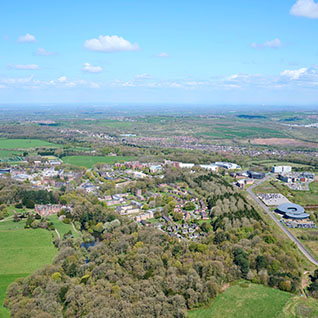
Newcastle-under-Lyme provides access to a large university campus and the wider towns and countryside of Staffordshire. Students can explore the gardens, parkland and woodland at Trentham Estate, visit nearby Stoke-on-Trent for shopping and entertainment or travel to Alton Towers Resort. Keele’s extensive campus brings teaching, accommodation, green space and student facilities together, creating a more self-contained university experience than students might find in a large city centre.

Swansea
Swansea combines city life with direct access to the Welsh coast and the landscapes of the Gower Peninsula. Students can explore the waterfront, visit the National Waterfront Museum and Mumbles Pier or experience beaches, walking trails and outdoor activities including surfing and coasteering. The university’s coastal setting and the city’s more affordable scale create a distinctive student experience, with Cardiff and other parts of South Wales accessible by road and rail.

Plymouth
Plymouth is a coastal university city shaped by its maritime history and location in south-west England. Students can explore the waterfront, visit the National Marine Aquarium or take part in activities including paddleboarding, kayaking and surfing. The city centre provides shopping, food and entertainment, while nearby beaches, moorland and the wider Devon and Cornwall coast offer access to natural landscapes. Plymouth provides a city-based student experience with the sea integrated into everyday life.
Image Slider


Essential study information
Visas: what you will need
Most international students need a student visa to study in the UK. To apply, you will typically need:
- An offer from a licensed UK institution
- A Confirmation of Acceptance for Studies (CAS)
- Financial evidence covering tuition fees and living costs
- Proof of English language proficiency
- A completed application and a valid passport
- Biometrics (fingerprints and a facial photograph)
- A Tuberculosis (TB) test certificate, in certain circumstances
- Academic Technology Approval Scheme (ATAS) clearance, for certain postgraduate courses
- Parental consent, if you are under the age of 18
It costs £524 to apply. There is an additional Immigration Health Surcharge of £776 per year, which gives you access to the UK’s National Health Service (NHS) while you study.
Decisions typically take around 3 weeks if you apply from outside the UK, or 8 weeks if you apply from inside the UK. Delays can occur, and priority services are available in some countries.
It’s your responsibility to stay compliant with your visa conditions and make sure it doesn’t expire while you’re in the UK. It’s also worth knowing the address and website of your home country’s embassy or consulate in the UK, in case you need to renew your passport or need other consular help.
Work rights
On a student visa, you can apply for part-time work, usually up to 20 hours per week during term-time. This income is meant to supplement your funds, not to cover your tuition fees or main living costs.
Banking
Many UK banks offer student-friendly accounts with mobile banking and budgeting tools, Options includ HSBC, Barclays, Lloyds Banking Group and NatWest Group. Opening an account can take anywhere from a few days to several weeks, especially with traditional high-street banks. Make sure you arrive with enough funds to cover your initial expenses.
To open an account, you will usually need:
- A valid passport
- Proof of immigration status (an eVisa share code)
- Proof of student status (a letter from your university)
- Proof of your UK address
Digital banks such as Monzo, Starling and Revolut can offer faster account set-up and are useful when you first arrive, though they may not offer every feature of a traditional bank.
Studying in the UK as a minor
If you are under 18 when your course starts, you will need to show proof of guardianship as part of your visa application.
A guardian is a responsible adult who is a United Kingdom citizen or permanent resident. They take care of and support you while you are in the UK. If you already know someone in the UK who meets these requirements, you are welcome to use them as your guardian. Otherwise, your college can put you in touch with a guardianship provider.