Dubai combines a high-energy city environment with international communities, modern infrastructure and access to major industries. Students can explore Downtown Dubai and the Burj Khalifa, spend time around Dubai Marina and the city’s beaches, or experience the historic streets and cultural spaces of Al Fahidi. Metro, road and air links help connect different parts of the city, while desert landscapes, major events and year-round entertainment provide plenty to experience beyond the classroom.

United Arab Emirates
Why study in the UAE?
Students in the United Arab Emirates enjoy a thriving and exciting job market, state-of-the-art teaching and learning facilities, and cosmopolitan desert city life.
English-medium teaching, a multicultural population, plus strong links between universities and employers make it an easy place to settle into. In a strategic location between Asia, Africa and Europe – the UAE is a practical base for a regional career.
International universities
The UAE is home to branch campuses of leading global institutions, offering internationally recognised degrees.
Multicultural community
With residents from over 200 nationalities - it is easy to adapt, make friends and feel at home while studying abroad.
A strategic global location
Being positioned between Asia, Africa, and Europe makes it a natural base for international exposure.
Student life in Dubai
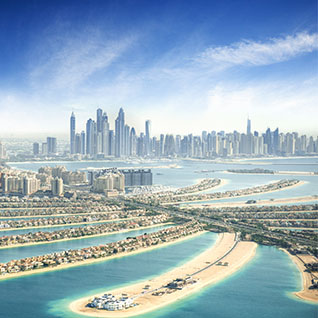
Image Slider

Essential study information
Visas: what you will need
International students in the UAE study under university sponsorship for a student visa – your institution acts as your sponsor (kafeel) and manages the bulk of the visa process on your behalf, including your entry permit and residence visa. If a parent is already a UAE resident, you may instead be able to study under their family sponsorship. To apply, you will typically need:
- An official offer or acceptance letter from an accredited UAE institution
- A valid passport with at least 6 months’ validity
- Proof you can cover tuition and living costs
- A medical fitness test, completed after you arrive
- Mandatory UAE health insurance
- Payment of institutional visa fees or deposits, set by your university
Your student visa is typically a renewable one-year residence permit and tied to your enrolment, often with a 3-5 week wait for processing. You will also be issued an Emirates ID after your visa and medical formalities are complete, which is needed for everyday tasks like opening a bank account.
Work rights
You can work part-time while studying, but a student visa alone does not give you the right to work – you will also need a separate work permit from the Ministry of Human Resources and Emiratisation (MOHRE). Your prospective employer applies for the permit on your behalf.
Many full-time students at Murdoch University Dubai find part-time work with approved employers on a temporary work permit.
After you graduate
The UAE does not convert your student visa directly into a work visa, but it offers a few clear pathways once you finish studying.
Job Seeker visa
A short-term visa (60, 90 or 120 days) that lets you search for work in the UAE without a sponsor. It is generally open to graduates of the world’s top 500 universities (as classified by the UAE Ministry of Education) within 2 years of graduating, alongside other eligible skilled candidates.
Golden Visa
For outstanding students and graduates, it is a 10-year renewable residency for high-performing students and graduates of top UAE and international universities. This visa does not require a sponsor and allows you to work freely.
Employer-sponsored work visa
Once you secure a job offer, your employer sponsors your work permit and residence visa directly. Your Job Seeker visa (if you held one) can convert into this.
Cost of living
Living costs vary significantly by location and lifestyle, with Dubai and Abu Dhabi generally the most expensive. Not including tuition, most international students budget around AED 3,000-6,000 per month.
On top of the common living expenses, there is a one-off student visa cost of roughly AED 5,500-8,500. This covers the entry permit, medical fitness test, Emirates ID and mandatory health insurance – which is usually arranged and collected by your university.
Health and safety
The UAE has strict regulations and a highly developed healthcare system. Health insurance is a mandatory part of every student visa, which your university will help arrange as part of the visa process – check what is included in your policy, and whether you need to supplement it for additional cover.