Canada’s largest metropolitan region offers extensive cultural, professional and international connections. Students can explore the waterfront and Toronto Islands, visit neighbourhoods known for their different food and cultural communities, or attend major sporting, music and arts events throughout the year. The city is also home to industries spanning business, technology, media and the creative economy, placing students within a busy urban environment with opportunities to build experience and professional connections.

Canada
Why study in Canada?
Canada has a long tradition of welcoming people from around the globe. Today, it is one of the most popular destinations for international students. It also has one of the world’s best standards of living and is famous for its breathtaking natural attractions, fascinating cities, and friendly people.
Breathtaking landscapes
The world's second-largest country and longest coastline, with prairies, forests, mountains, coastlines and the Great Lakes on your doorstep.
Strong work rights
Graduates can apply for a Post-Graduation Work Permit valid for up to 3 years, depending on the length of their studies.
Welcoming society
Almost one in four people in Canada were born outside the country, and multiculturalism is a celebrated part of national identity.
Canada’s student cities
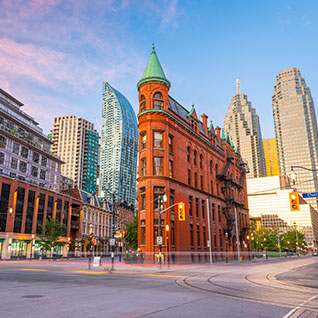
Toronto

Vancouver
Vancouver combines a major Pacific city with easy access to beaches, mountains and extensive green spaces. Students can walk or cycle around Stanley Park and the seawall, explore the food and markets of Granville Island, or experience the city’s different waterfront neighbourhoods. Vancouver is also connected to film, television, music, technology and digital entertainment, while nearby trails, ski areas and coastal destinations make outdoor experiences a regular part of life in the region.

Winnipeg
Winnipeg is a central Canadian city with a well-established arts, culture and festival scene, offering a more accessible scale than Canada’s largest metropolitan regions. Students can visit The Forks, explore the Canadian Museum for Human Rights or experience the city’s galleries, music and seasonal events. Winnipeg’s rivers and trails shape outdoor life throughout the year, while its economy includes sectors such as aerospace, biotechnology, agriculture and food production.

Calgary
Calgary is a growing western Canadian city with strong connections to business, technology, finance and energy. Students can explore the city centre, attend major events such as the Calgary Stampede or use the city as a starting point for visiting Banff, Lake Louise and the Rocky Mountains. Calgary combines the amenities and opportunities of a major city with access to some of Canada’s best-known mountain landscapes and outdoor experiences.
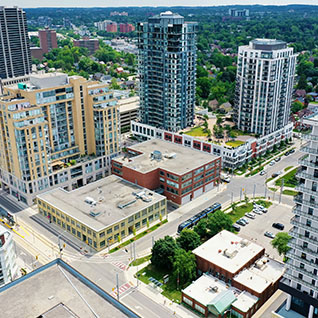
Waterloo
Waterloo is a university-centred city within one of Canada’s best-known technology and innovation regions. Students can explore the cafés, shops and restaurants of Uptown Waterloo, attend festivals and cultural events, or use the area’s trails and green spaces throughout the year. The wider Waterloo region is home to an active technology and entrepreneurship community, giving the city a strong connection to innovation, business and work-integrated learning opportunities.

London, Ontario
London is a student city known for its parks, tree-lined streets and strong university community. Students can explore the Thames River parkways, visit Covent Garden Market or experience the city’s museums, galleries, music venues and sporting events. Recognised as Canada’s first UNESCO City of Music, London offers an active cultural calendar while maintaining a more compact scale than nearby Toronto.
Image Slider





Essential study information
Visas: what you will need
Most international students need a study permit to study in Canada. If approved, it is usually issued for the length of your study program plus 90 days – extra time to prepare to leave Canada or apply to extend your stay.
Study permits are tied to a specific Designated Learning Institution (DLI). If you transfer institutions you will need to apply for a new one. To apply, you will typically need:
- A letter of acceptance
- A provincial or territorial attestation letter (PAL or TAL)
- Proof of identity, such as a valid passport
- A letter explaining why you want to study in Canada (recommended)
- A medical exam, in certain circumstances
- A police certificate, in certain circumstances
- Proof of guardianship, if you’re studying as a minor
- Other documents, depending on your country of application
Full details are available on the Government of Canada website.
It is your responsibility to stay compliant with your visa conditions and make sure it does not expire while you are in Canada. If you need to renew the visa, it is best to start the process at least 3 months before your permit expires. More details about requesting a permit extension can be found on the IRCC website. It is also worth knowing the address and website of your home country’s embassy or consulate in Canada, in case you need additional consular help.
Work rights
Your study permit will state whether you’re allowed to work on or off campus. Most international students need a work permit to work in Canada, though eligible students can work without one if they meet certain conditions.
On campus
To work on campus, you must have the following.
- Be studying full-time at a Designated Learning Institution (DLI)
- Part-time is allowed in your final semester if you studied full-time up to that point
- Hold a valid study permit that allows on-campus work
- Have a Social Insurance Number (SIN)
There is no weekly hour limit, but restrictions apply to where and for whom you can work.
Off campus
There are some differences with working off-campus. You must:
- Be studying full-time in a program of at least 6 months that leads to a degree, diploma or certificate
- Hold a valid study permit that allows off-campus work
- Have a Social Insurance Number (SIN)
- Work up to 24 hours a week during term time, with unlimited hours during scheduled breaks.
Post-Graduation Work Permit
After you graduate, you may be eligible for a Post-Graduation Work Permit (PGWP) to stay and work in Canada. As a requirement, your program must be at least 8 months long (900 hours in Quebec). How long the permit lasts depends on your program.
- Up to 3 years after a Master’s degree
- Up to 3 years if your program was 2 years or longer
- The same length as your program – for example, 9 months after a 9-month program
The expiry date of your passport can also affect how long your permit is valid for.
Cost of living
On top of tuition fees, budget approximately C$15,000-C$25,000 per year for living expenses. This typically covers accommodation, food, utilities, transportation, textbooks and personal spending. Actual costs depend on the city, your lifestyle and housing choice. Larger cities like Toronto and Vancouver tend to be more expensive than smaller or mid-sized ones.
It is also worth planning for one-off costs that are not calculated in that estimate. These costs may include a laptop, season-appropriate clothing, or a car.
Health and safety
All international students in Canada must have medical insurance while they study. Many colleges arrange this for you through a private provider as part of your initial tuition deposit, with cover typically starting a few days before orientation. If you arrive earlier, you can buy short-term cover to bridge the gap. Your college’s website will have details on cost, what is covered, and how to apply – it is worth checking this as soon as you accept your offer.