International ACAC 2026: Navigating Non-Traditional Conversations with Traditional Parents
What makes a conversation non-traditional? Is it the topic itself, or simply the fact that we have not yet learned how to talk about it?
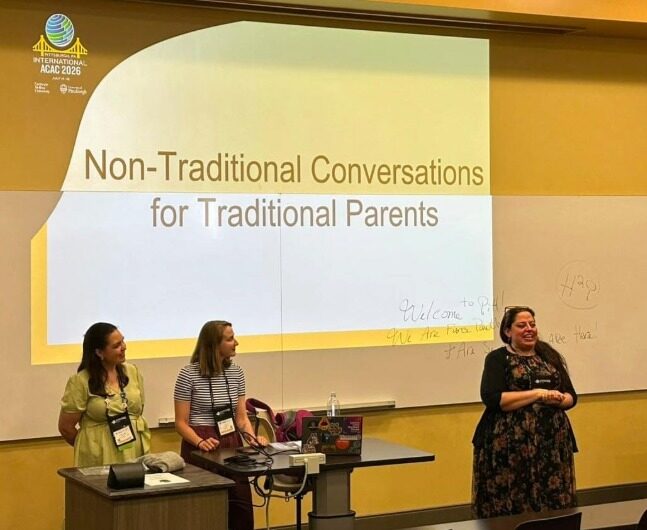
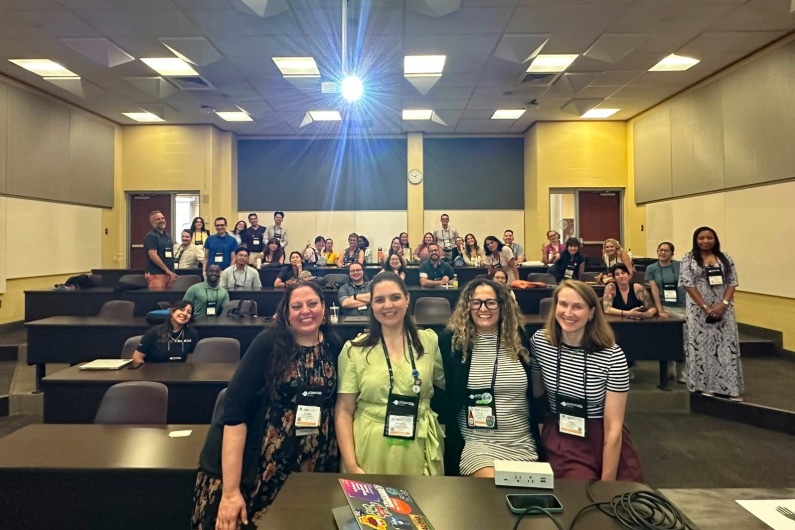
These questions became the starting point for the session, Non-Traditional Conversations for Traditional Parents, presented by Lorraine Castanares, Navitas School Engagement Manager – LATAM, together with Majo Lamadrid (The American School Foundation of Monterrey), Christie Culp (Loyola Marymount University), and Chris Lundstrom (Unifrog) at the 2026 International ACAC Conference in Pittsburgh, Pennsylvania, USA. Together, they facilitated an affinity and discussion group that invited counsellors to reflect on how the profession is changing alongside the realities facing today’s students.
The responses revealed something fascinating.
What feels entirely ordinary in one school may still feel uncomfortable in another. Conversations about mental health, anxiety, identity, belonging, alternative pathways, or family expectations are becoming increasingly common, yet the degree to which they are embraced varies enormously across educational contexts.
Participants reflected on conversations that challenge long-held assumptions about higher education. Is university prestige always the most important factor? Should rankings outweigh a student’s sense of belonging or psychological safety? Is a Foundation Program a second-choice option, or could it represent the strongest strategic pathway for a particular student?
Perhaps one of the most significant shifts discussed was the changing role of parents.
Increasingly, counsellors are encouraging families to move from solving every problem to creating the conditions in which young people can develop resilience, independence, and confidence. Sometimes the greatest support a parent can offer is not another solution, but the willingness to listen.
For many counsellors, recommending a Foundation Program has become an evidence-based conversation centred on student fit and long-term success. For others, it remains one of the most sensitive recommendations they can make. Similarly, discussions about changing majors, taking additional time before university, prioritising wellbeing over prestige, or acknowledging neurodiversity continue to challenge traditional expectations in many communities.
What emerged from the session was not a universal definition of a non-traditional conversation, but rather an understanding that these conversations reflect the evolving needs of students themselves.
The profession of college counselling is undergoing a quiet transformation.
It is no longer defined solely by admissions, application timelines, or university offers. Increasingly, counsellors are helping families navigate uncertainty, competing priorities, changing aspirations, and the emotional complexity that accompanies major life decisions.
Success itself is being redefined.
Instead of asking only, “Which university is the best?”, counsellors are increasingly inviting families to consider different questions:
- Where will this student truly flourish?
- Which environment will allow them to feel safe enough to grow?
- Where will they develop confidence to become independent?
- Which pathway gives them the strongest chance of long-term success, not simply immediate admission?
Perhaps these conversations feel non-traditional only because the definitions of success are still catching up with the realities of today’s students.