
Foreign universities are about to meet the Indian students they never really knew

Vikas Panjwani
For decades, foreign universities have believed they understood the Indian student. And in many respects, they do. They have recruited Indian students at scale, built extensive alumni communities and spent years learning what drives their choices.
But that understanding comes with an important selection effect. It has largely been shaped by students who were willing and able to leave India. Foreign universities know the Indian student who moves. These students matter enormously, but they are not the whole market. As foreign universities increasingly establish themselves inside India, they are about to encounter a much broader part of the Indian student market.
The student who stays
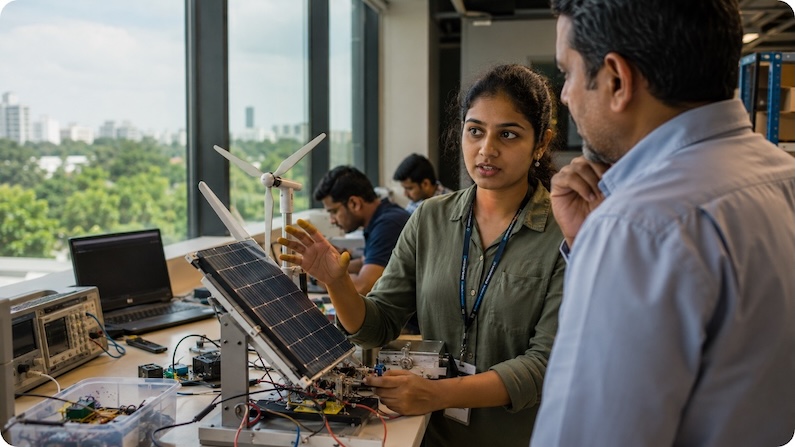
There is another Indian student whom foreign universities have historically had much less reason to understand. They may be academically strong, globally ambitious and willing to pay for quality. They may want an internationally recognised qualification, global exposure and a career with a multinational company. But what they may not want is to leave India to get it.
That distinction is becoming increasingly important. For a student building a career in technology in Hyderabad, financial services in Mumbai or entrepreneurship in Bengaluru, staying in India need not reflect constrained ambition. It can be a positive choice about where they believe opportunity lies. Their ambitions can be global without their lives needing to be. This is the consumer TNE brings more clearly into view: students who value international education, but not necessarily international mobility.
They represent a “missing middle”. Not because they occupy the middle of India’s income distribution, but because they sit in a space our international education model has historically struggled to see: between students seeking a purely local proposition and those for whom international education has traditionally meant leaving India. They are not new consumers. They are newly visible ones. And that is the critical distinction: TNE is not simply a different way of serving the same market. It brings a much broader part of the Indian student market into view.

Meet the ‘missing middle’: Internationally ambitious. Locally rooted. Historically overlooked.
The student who stays thinks differently from the student who leaves
A student considering overseas study is choosing not only a university, but a destination, an international experience and, potentially, access to post-study work and the possibility of building a life overseas.
The student who stays makes a different comparison. The foreign university now sits alongside strong Indian alternatives. The questions become more direct: Will employers value it? Is it meaningfully better than the alternatives? Will I get genuinely international exposure? What outcomes will it create? Why should I pay a premium?
For the outbound student, “international” has historically meant going somewhere. For the student who stays, it needs to mean getting something.
The TNE student is not a failed outbound student
A different definition of value
India is frequently described as price-sensitive. That can obscure something more interesting: consumers are often willing to pay a premium when the distinction in quality, status or outcomes is clear enough.
Higher education presents an especially demanding version of that test: the investment is significant and the outcome takes years to reveal itself. For an international university, the question is therefore not simply whether Indian families can afford premium tuition. It is whether the proposition gives them sufficient reason to pay it.
And that value will not look the same for every student. Success might mean joining a multinational, building a startup or growing a family business. Universities that design around these ambitions, and reflect them through employability, entrepreneurship, industry connections and experiential learning, will be more relevant than those that simply transplant an existing international proposition.
A global reputation may open the door, but long-term success will depend on whether the institution can demonstrate genuine relevance to Indian students and employers.
Learning before scaling
This is why criticism of foreign universities starting with relatively modest campuses may be misplaced. Physical proximity does not automatically create consumer understanding. Opening a campus brings the university closer to the student, but it does not reveal how families make decisions, what employers value or which elements of the global proposition matter locally. Those things have to be learned.
Across industries, India has repeatedly rewarded organisations that learn how consumers make decisions locally rather than simply importing a proposition unchanged.
Successful companies understand how India makes decisions, not just what India buys. Higher education is unlikely to be any different.
There is another challenge facing every new entrant. In its early years, a foreign university campus sells a promise. In time, it can sell evidence. At launch, an institution can point to its global reputation, curriculum and outcomes elsewhere, but not yet to its own track record in India. Over time, it builds Indian graduates, employer relationships, alumni stories and evidence of career outcomes. Students and partners place their trust in institutions that have proven themselves over time. Those reputations are built over years, not a few semesters.
Seen this way, starting small may not reflect limited ambition. It may simply recognise that building market knowledge, earning trust and proving the proposition takes time.

Becoming meaningfully Indian
India should not be viewed as either a guaranteed opportunity or an insurmountable challenge. Success will depend on how effectively institutions respond to the students they are seeking to serve, including a segment that has historically sat outside their field of view.
The universities that succeed are unlikely to do so simply because of brand strength, campus scale or pricing. They will need to learn and adapt while preserving what makes their international proposition distinctive.
The challenge is to remain globally valuable while becoming locally meaningful.
In that sense, bringing an international university to India is only the beginning. The greater challenge is becoming meaningfully Indian.