Rights, Justice, and Action in Southern India: How Indigo Foundation supports women and girls
As the world celebrates International Women’s Day under the 2026 Global UN theme, Rights. Justice. Action. For ALL Women and Girls, we were delighted to speak to NET partner, Indigo Foundation, to learn more about their work supporting women, girls, and their communities in Tamil Nadu, India.
This International Women’s Day, we reached out to Indigo Foundation to learn more about their work with women and girls in southern India, which the NET has supported for the past three years.
We spoke to Stav Zotalis, Executive Director, Indigo Foundation who shared how Indigo supports at-risk communities to transform the lives of women and girls through education.
What programs does Indigo Foundation deliver in India to support women and girls?
In the southern Indian state of Tamil Nadu, Indigo Foundation supports two long-term, community-led education programs: Uplift in Madurai and the Program for Education and Awareness Building (PEAB) in rural Maduranthakam, about 90 kilometres from Chennai.
Both programs work with highly marginalised communities – including Dalit families and minority groups – where discrimination, poverty and social exclusion limit opportunities, especially for women and girls.
In Madurai, Uplift operates in a densely populated city slum where families often live in a single room with shared sanitation. The program provides after-school tuition, computing classes, a small library, youth development sessions, and martial arts training. It also runs tailoring and jewellery-making classes, and a Domestic Workers Program that prepares women for employment and monitors their working conditions to ensure they are treated fairly.
In rural Maduranthakam, PEAB supports children and young people through six Village Education Centres and a Coaching Centre for senior students. Alongside tutoring and exam preparation, students access computing classes and even robotics workshops.
What impact does education have on the lives of girls and women?
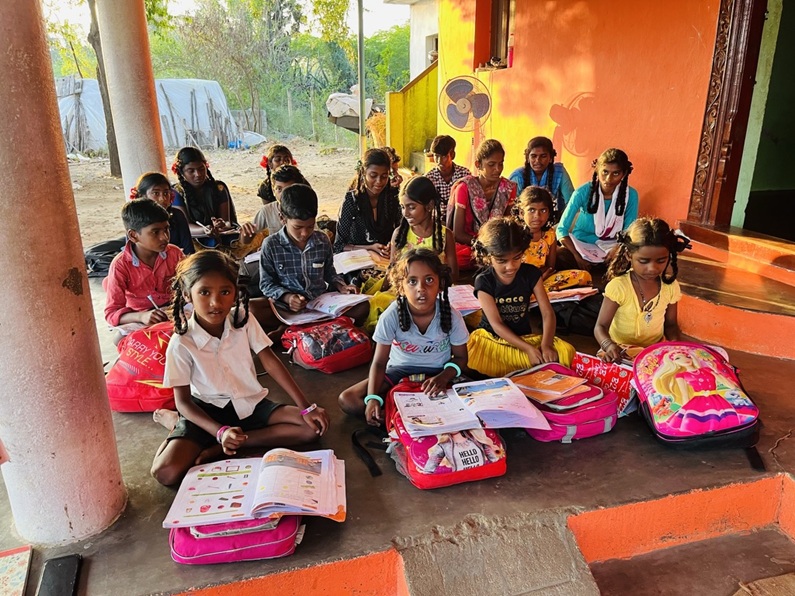
The impact of education in these communities is profound and practical. For many girls in Madurai’s slum district or Dalit villages in Maduranthakam, after-school tuition is the difference between dropping out and completing Year 10.
At Uplift, 44 girls participated in the after-school program in 2024–25, supported by eleven tutors who know each family’s circumstances. Senior students receive intensive coaching before state exams. Last year, eighteen students passed these critical exams and all continued to further education. Education here is not abstract – it is a direct pathway to independence and dignity.
At PEAB, ninety girls attended Village Education Centres in 2025. All 21 Grade 10 students enrolled at the Coaching Centre passed their final exams. Computing classes teach girls to use Word, Excel and government portals, skills that open employment opportunities in nearby Chennai. Robotics workshops challenge stereotypes about who belongs in science and technology.
Just as importantly, education builds self-belief. Parents report emotional as well as academic improvements. Young women who gain qualifications are better equipped to resist early marriage, navigate government systems, secure safer work and advocate for their rights. Education strengthens not only individuals, but entire communities.
How do women support Indigo’s India programs as staff or volunteers?
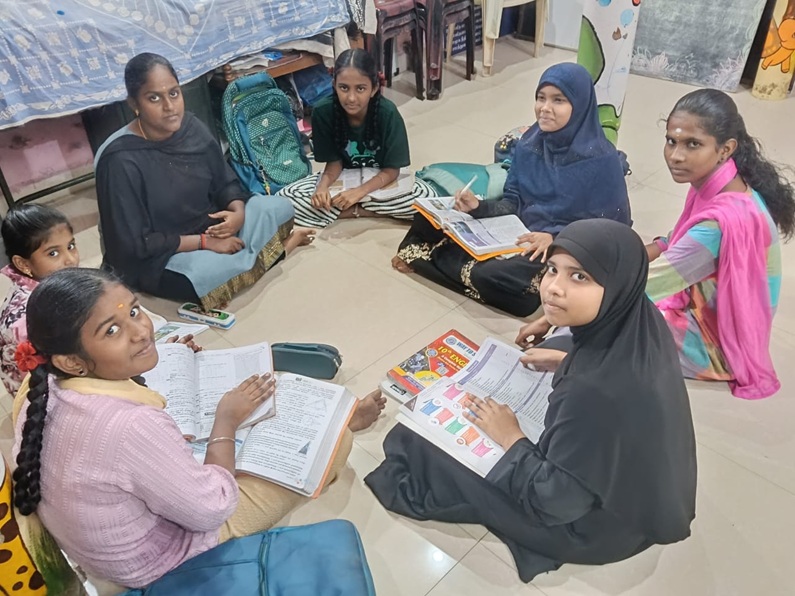
Women are at the heart of both programs – not just as participants, but as educators, mentors and community leaders.
At Uplift, most staff and facilitators live in the same slum community they serve. Many experienced disadvantage themselves but transformed their own lives through education. Now they are giving back. Several tutors were once students in the after-school program. Today, they provide both academic guidance and emotional support, and undertake weekly “wellbeing walks” through the slum to stay connected with families.
Importantly, most of these women work in what is effectively a voluntary capacity. They receive only a very small monthly stipend – around AUD $30-$100 – yet carry significant responsibility for tutoring students, running youth sessions, and supporting women navigating health and government systems.
At PEAB, Village Education Centres are run by committed local tutors, many of them women college graduates. They hold classes on back porches, rooftops and in shared community spaces, creating safe, welcoming environments for girls and boys to learn.
Their commitment reflects something powerful: when women are trusted as leaders and educators within their own communities, change is not imposed from outside: it grows from within.
This is what “Rights. Justice. Action.” looks like in practice: women supporting women, education creating opportunity, and communities leading their own change.
Have you heard of the NET?
The Navitas Education Trust (NET) funds education projects to help people gain better access to education, creating positive far-reaching impact for many communities around the world. For the last 11 years, we have partnered with forward-thinking and sustainability-oriented organisations bringing education to disadvantaged communities around the world.
In FY26, the Navitas Education Trust (NET) is supporting three incredible NET partners: indigo foundation (India), Classroom of Hope (Indonesia), and KOTO (Vietnam).
Learn more about the NET