Curtin Singapore hosts Radio Astronomy Research Workshop
Curtin Singapore recently hosted a Radio Astronomy Research Workshop, providing participants with hands-on exposure to how astronomers study the universe using radio waves. The workshop was led by Bijaya Luitel and Dr Clancy James from the Curtin Institute of Radio Astronomy (CIRA) and brought together participants from a wide range of academic backgrounds, from secondary school students to a post-PhD researcher.
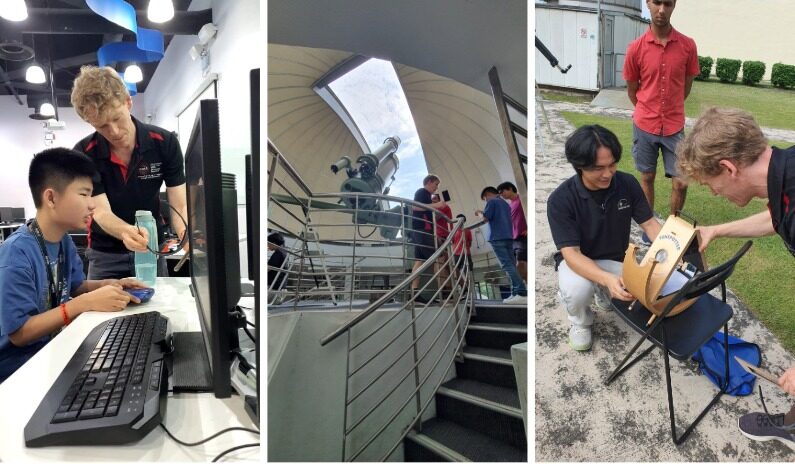
The workshop focused on Fast Radio Bursts (FRBs), extremely powerful, millisecond-long bursts of radio emission originating from distant galaxies. Through this theme, participants were introduced to the scientific methods and tools used in modern radio astronomy research. Over the course of the program, participants developed essential skills in Python programming and data analysis, reflecting the increasingly data-driven nature of astronomical research. Structured activities included image analysis, survey statistics, and model fitting, alongside key astrophysical concepts required to understand FRBs, such as polarisation, dispersion in the interstellar and intergalactic medium, and scintillation.
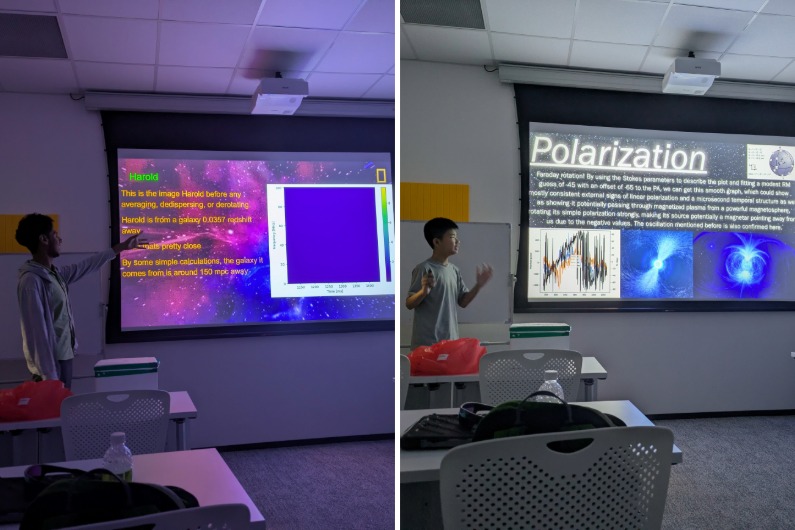
A central component of the workshop was the analysis of real observational data from the Australian Square Kilometre Array Pathfinder (ASKAP) telescope. Each participant was assigned data associated with at least one FRB and tasked with analysing the observations. The workshop concluded with participants presenting their findings, simulating the end-to-end research process from data analysis to scientific communication.
The program also included a visit to the Singapore Science Centre, where participants conducted safe solar observations using specialised telescopes and explored how the universe is observed at radio wavelengths through a planetarium session. This visit complemented the workshop by providing an experiential perspective on astronomical observations across different parts of the electromagnetic spectrum.
The workshop highlights Curtin Singapore’s commitment to research-led education, offering learners early exposure to authentic research practices, global research infrastructure, and active researchers from Curtin’s international network. By engaging participants at different stages of their academic journey, the program demonstrated that with foundational programming skills, radio astronomy research is both accessible and impactful.